Indústria

Validação ágil e prototipagem para o lançamento de um ecossistema de cozinha inteligente.
Concepção e validação de um produto disruptivo através de workshop de Design Sprint, integrando hardware e software para transformar a experiência gastronômica doméstica.
01. Problema
Inovar em um mercado tradicional de utilidades domésticas exige coragem e, acima de tudo, assertividade. A empresa tinha o desafio de lançar um produto que não era apenas um hardware, mas uma experiência conectada (IoT). O risco de investir meses em desenvolvimento sem a certeza da aceitação do usuário final era alto. Era necessário um método que permitisse testar a proposta de valor, a usabilidade da interface e a integração com o produto físico antes de iniciar a produção em larga escala.
02. Diagnóstico
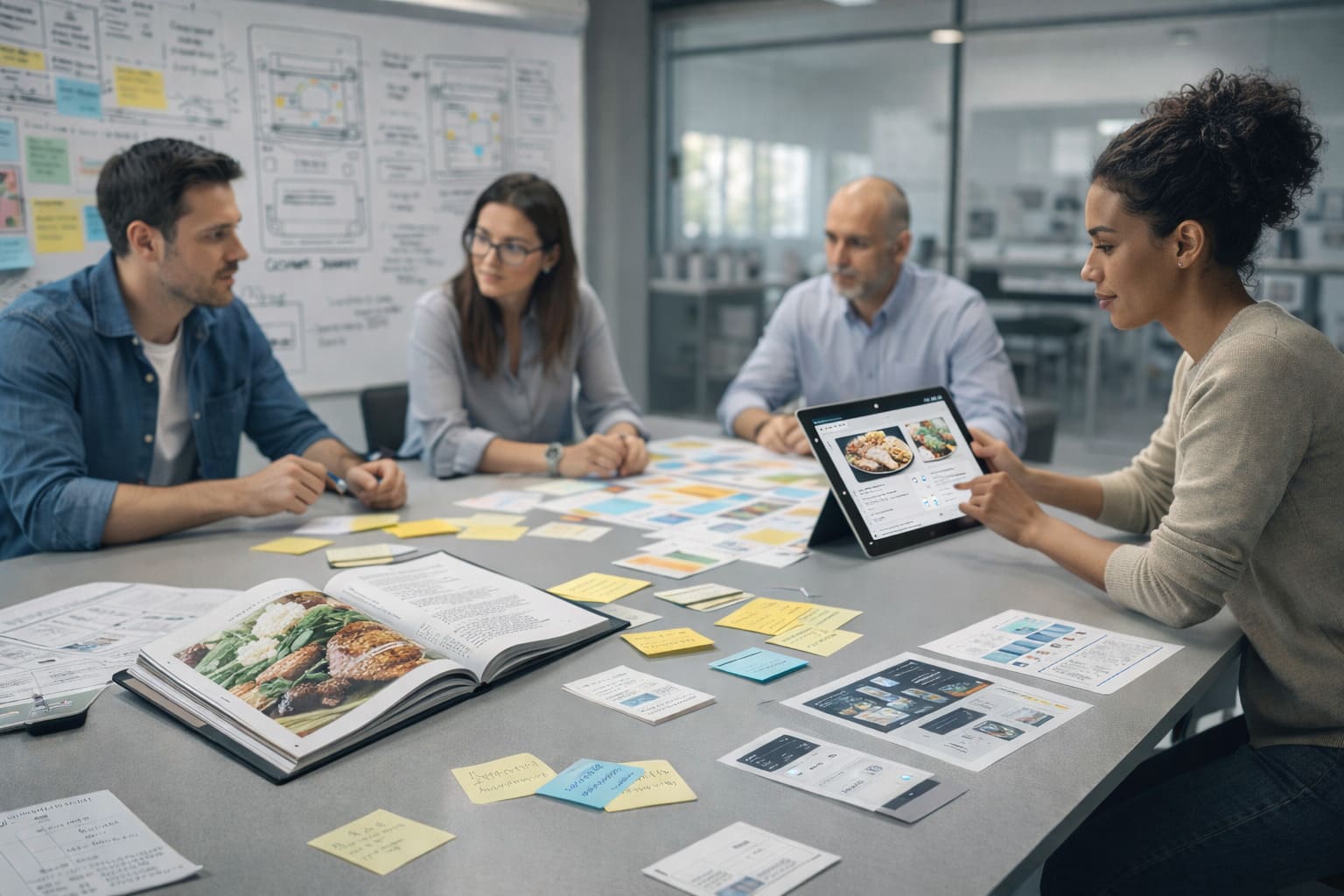
A análise da DB identificou que o modelo tradicional de P&D (Pesquisa e Desenvolvimento) seria lento demais para a dinâmica de produtos digitais. Diagnosticamos a necessidade de um Design Sprint: um processo de cinco dias para responder a questões críticas de negócio através de design, prototipagem e teste com clientes. O objetivo era alinhar as expectativas das áreas de engenharia, marketing e negócios em uma única visão de produto, focada na dor do usuário: a insegurança ao cozinhar pratos complexos.
03. Resolução
A DB facilitou um workshop de Agile Design, reunindo stakeholders-chave em um ambiente de cocriação. Durante a jornada, transformamos ideias abstratas em um protótipo de alta fidelidade que simulava a interação entre o aplicativo e o equipamento físico. Realizamos testes de usabilidade em tempo real com usuários do perfil alvo, coletando feedbacks valiosos que moldaram as funcionalidades finais. Essa abordagem permitiu ajustes rápidos no conceito e no fluxo de navegação, garantindo que o desenvolvimento técnico subsequente fosse focado em recursos já aprovados pelo mercado.
Benefícios obtidos

Validação de Mercado Antecipada
Redução de riscos financeiros ao testar e validar o conceito do produto com usuários reais antes do desenvolvimento final.

Agilidade no Go-To-Market
O processo acelerado permitiu que o produto fosse lançado com sucesso, cumprindo metas estratégicas de inovação da companhia.

Alinhamento Multidisciplinar
Integração das visões de negócio, tecnologia e design, resultando em um produto final coeso e centrado no usuário.

Experiência de Cozinha Conectada
Entrega de um ecossistema digital que guia o usuário de forma intuitiva, elevando o patamar tecnológico da marca no setor de Smart Home.